Stacking rings and knuckle rings: sizing, care and balance
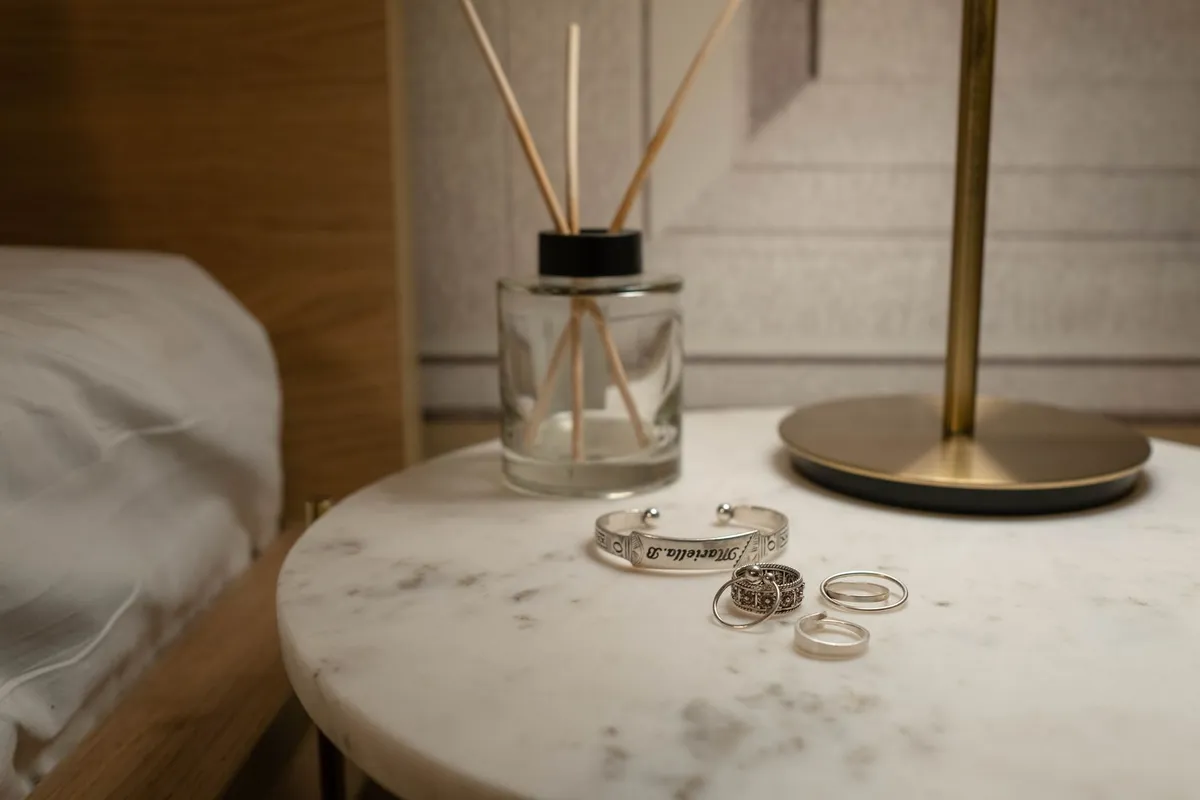
Thin rings worn in groups have quietly become one of the easiest ways to make your hands look finished. A stack can be as simple as two plain bands or as busy as a ring on almost every finger. Add above-the-knuckle rings, often called midi or knuckle rings, and you have even more ways to play. Here is how to get the sizing right, look after the metal, and build stacks that feel balanced rather than cluttered.
Stacking rings versus midi rings
Stacking rings are slim bands designed to be worn together at the base of the finger, in the usual ring position. They are often plain, twisted, hammered, beaded or set with a single tiny stone, so they sit comfortably side by side.
Midi rings sit higher up, on the upper part of the finger between the top knuckle and the middle knuckle (the upper phalanx). Because that part of the finger is narrower, midi rings are noticeably smaller than your usual ring size. They are a lighter, more playful accent and work best when they are very fine.
Getting the size right
Regular stacking rings
Thin bands often feel looser than wide ones of the same size, while a stack of several bands takes up more room on the finger and can feel tighter. A few tips:
- Measure at the end of the day, when fingers are at their largest, and avoid measuring when your hands are very cold.
- Make sure the ring slides over the knuckle with slight resistance but does not spin freely at the base.
- If you plan to wear three or more bands on one finger, consider going up half a size for the ones at the bottom of the stack.
Midi rings
There is no universal midi sizing chart, so it is best to measure the exact spot where you want the ring to sit. Wrap a thin strip of paper around the upper phalanx, mark where it overlaps, and measure the length to get the circumference. Compare it with the seller’s size guide.
Many midi rings are sold open-ended or slightly adjustable, which is helpful because the fit is less predictable. A midi ring should stay in place when you move your hand but should never pinch or leave a mark. Take them off for washing up, sport and sleeping: small rings slip off easily.
Materials and tarnish care
Sterling silver is the most common material for affordable stacking rings. It is 92.5% silver, with the rest usually copper, which makes it strong enough to wear. That copper and silver react with air and moisture, which is why sterling silver darkens, or tarnishes, over time. Tarnish is a surface change, not damage, and it can be cleaned.
To keep silver bright:
- Wear it often; skin contact and gentle friction slow tarnish down.
- Put rings on after lotion, perfume and hairspray, not before.
- Remove them before swimming, cleaning with chemicals or using a hot tub.
- Store pieces in a small zip bag or a lined box, ideally with an anti-tarnish strip.
- Clean with a soft silver polishing cloth; for oxidised or textured designs, polish lightly so you keep the dark details.
Gold and gold-tone rings follow the same everyday rules. Solid gold does not tarnish in the same way, while plated pieces wear with friction, so treat them gently. Our guide to layering gold jewellery explains the difference between solid gold, vermeil and plated pieces.
How many rings is too many?
There is no rule, but there is a useful idea: give the eye somewhere to rest.
| Look | Roughly how many | Works for |
|---|---|---|
| Minimal | 2 to 4 rings in total | Office, everyday, small hands |
| Balanced | 5 to 7 rings across both hands | Weekends, evenings, most outfits |
| Statement | 8 or more | Simple outfits that let the hands lead |
If you are new to stacking, start with two thin bands on one finger and a single midi ring on the other hand. Live with it for a week and add from there.
Balancing both hands
A good stack rarely means matching hands. Try these approaches:
- Heavy and light. Put the busier stack on one hand and just one or two rings on the other.
- Skip a finger. Leaving the middle finger bare, for example, keeps a stack from looking crowded.
- Vary the heights. Combine base rings with a midi ring on a neighbouring finger to create a staggered line.
- Think about your nails. A detailed manicure, like dotting tool nail art, already adds pattern, so a quieter stack may look better alongside it.
Mixing metals
Mixing silver, gold and rose tones is now completely normal, and it lets you wear rings you already own together. To keep it looking intentional:
- Repeat each metal at least twice, so it reads as a choice rather than an accident.
- Use a two-tone ring or a twisted mixed-metal band as a “bridge” between the colours.
- Keep textures consistent, for instance all fine and polished, if the colours are varied.
- Echo the mix elsewhere: a watch, a bracelet or the hardware on your bag.
If you like your stacks a little bolder, a handmade cord bracelet adds contrast; try our braided leather bracelet project for something to wear alongside your rings.
This article may contain partner links. They never influence what we write.