Buying a gold chain in France: carats, links and second-hand finds
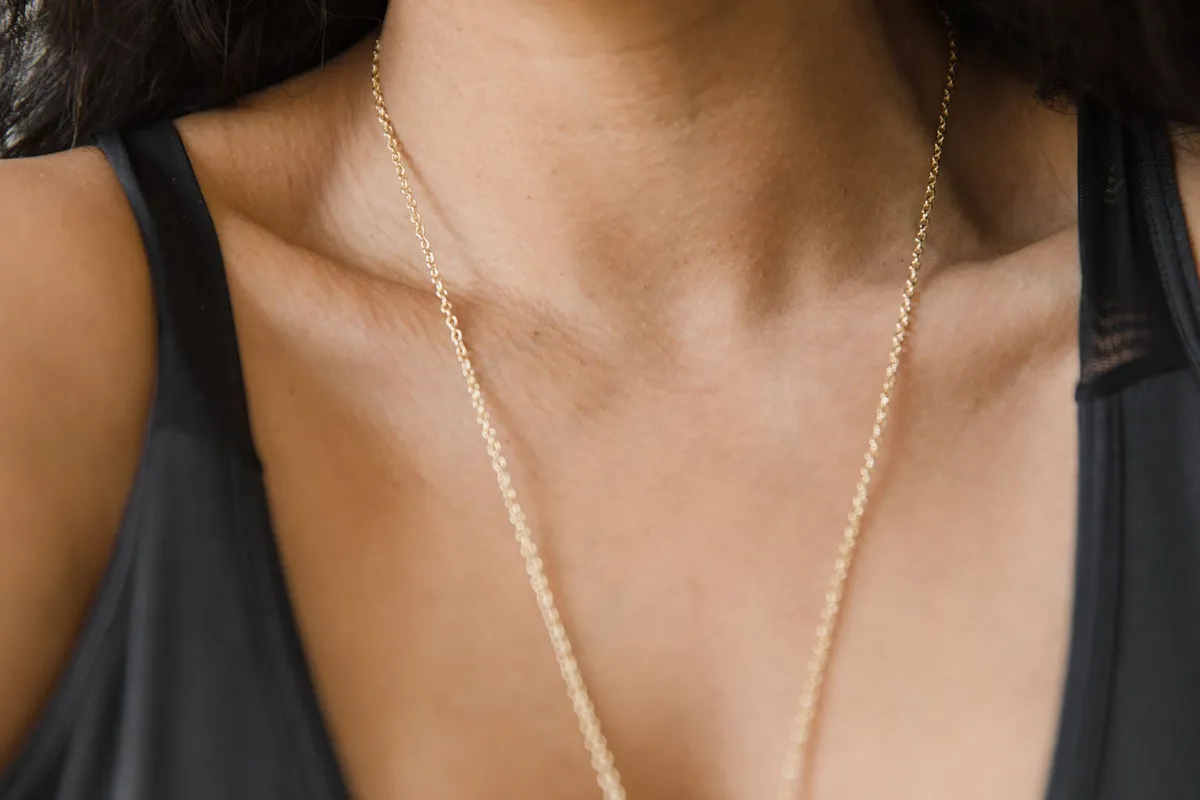
A fine gold chain is one of those pieces that works with everything: a white shirt, a black polo neck, a summer dress, a sharp blazer. It is also a classic thing to bring home from a trip to France, whether you are spending a long weekend in Paris or a week on the Côte d’Azur. French jewellery has its own habits, though, and knowing them makes the difference between a chain you wear for decades and one that disappoints after a season. Here is what to look for.
18 carats: the French standard
The first surprise for many visitors is the gold itself. In France, fine jewellery has traditionally been made in 18-carat gold, which is 75% pure gold. In Belgium and the Netherlands you will see 18k too, but also plenty of 14k, and in the UK 9k is common.
What this means for you:
- Colour. 18k yellow gold is warmer and richer than 9k or 14k. If you already own lower-carat pieces, a French 18k chain may look slightly deeper next to them.
- Softness. Higher-carat gold is softer, so fine 18k chains need a little care with clasps and knots.
- Price. More gold means a higher price per gram than lower standards.
Look for the eagle’s head hallmark, the French guarantee mark for 18k gold, usually stamped near the clasp or on a small tag. On very small pieces you may find the tiny seahorse instead. Lower standards, such as 9k and 14k, are also legal in France and carry their own marks, so a chain without the eagle’s head is not necessarily a fake, simply a different standard.
Choosing the link
The link, or maille in French, defines the character of a chain. The main families are:
| Link | Look | Best for |
|---|---|---|
| Cable (forçat) | Simple oval links | Pendants, everyday wear |
| Curb (gourmette) | Twisted, flat-lying links | A bolder chain worn alone |
| Venetian (vénitienne) | Small square links | A neat, graphic line |
| Rope (corde) | Twisted strands | Texture and light |
| Figaro | Alternating short and long links | A classic Italian look |
| Snake | Smooth, flexible tube | A minimal, liquid effect |
If you want to go deeper into the French names and how each one behaves, the French jewellery site Bijouenor has a detailed page on solid gold chains and their links that is worth a read, even with a translation tool.
For a first chain, a fine cable or Venetian link is the most versatile. It can carry a small pendant, sit alone at the collarbone or join other chains in a layered look.
Length and thickness
Chain length decides where the necklace sits, and thickness decides how much it is noticed.
- 40 to 42 cm sits close to the base of the neck, perfect with open collars.
- 45 cm falls just below the collarbone: the most versatile length.
- 50 cm and above sits on the upper chest and suits pendants and crew-neck knits.
Fine chains of around one millimetre are discreet and easy to layer; chains of three millimetres or more make a statement on their own. If you are planning to wear your new chain with others, our guide to layering gold jewellery explains how to space lengths so they do not tangle.
New or second-hand?
This is where France gets interesting. Alongside the jewellery boutiques, almost every French town has gold dealers who buy and resell second-hand jewellery. Because pre-owned gold is often priced closer to its weight in metal than a new designer piece, it can be a smart way to buy a solid 18k chain.
A few tips if you go down this route:
- Check the hallmark with a small loupe, and look at the clasp, which is the part most often replaced.
- Look at the links along the whole length. Stretched, flattened or mismatched links suggest repairs.
- Ask for the weight in grams. It is the clearest way to compare two chains of the same carat.
- Ask about a guarantee and keep the receipt.
Maison Or & Bijoux, for instance, is a French gold dealer with shops in Cannes, Mougins, Cagnes-sur-Mer, Strasbourg and Le Havre. Its site lists second-hand 18-carat gold jewellery with a 12-month guarantee, sold online with insured delivery or collection in store, alongside gold coins and bars. It is one example among many; the same checks apply wherever you buy.
Wearing it with the rest of your jewellery
An 18k yellow chain looks best with other warm golds. If most of your jewellery is silver, there is no rule against mixing, but it reads as more intentional when the mix is repeated: a gold chain with a stack of mixed rings, for example. Our piece on stacking rings and knuckle rings has a few ideas for balancing metals between neck and hands.
Everyday care
- Take your chain off before swimming, especially in chlorinated pools and the sea.
- Put it on after perfume and body lotion, not before.
- Store it fastened, on its own, so the links do not knot.
- Clean it occasionally in lukewarm water with a drop of mild soap, then dry it thoroughly with a soft cloth.
- Have the clasp checked by a jeweller from time to time: on fine chains, it is usually the first part to weaken.
The short version
When you buy a gold chain in France, look for the eagle’s head and expect 18 carats; pick a link that suits how you will wear it; choose a length around 45 cm if you are not sure; and do not overlook second-hand pieces, which can be excellent value. Treated with a little care, a good French chain is the kind of piece you will still be wearing in twenty years.
This article may contain partner links. They never influence what we write.