Leather shoe care: cleaning, polishing and making shoes last
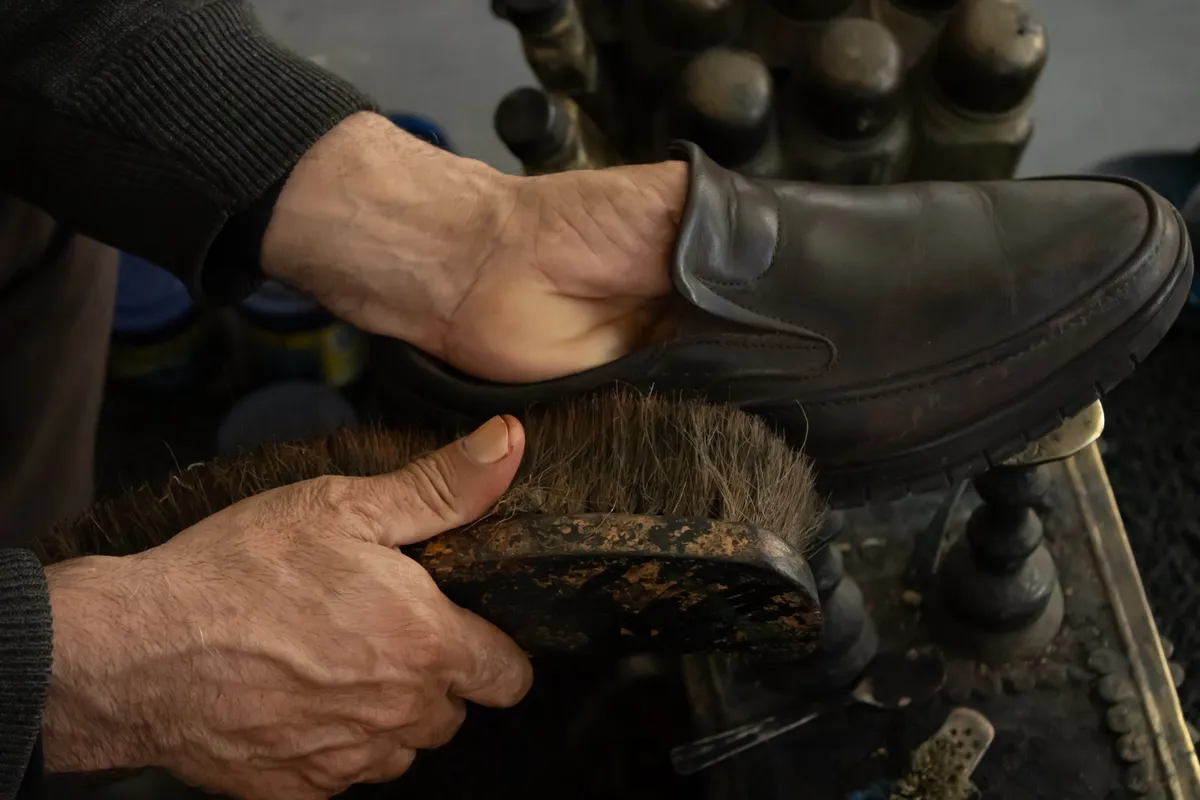
Well-made leather shoes can last for many years, but only if they get a little attention. Leather is a skin: it dries out, cracks, absorbs water and stains. A simple routine, a few minutes every couple of weeks, keeps it supple and good-looking, and saves money on replacements. Here is what you need and how to do it.
A basic shoe care kit
| Item | What it does |
|---|---|
| Horsehair brush | Removes dust and buffs polish to a shine |
| Soft cloths | Apply cleaner, conditioner and polish |
| Leather cleaner or saddle soap | Lifts dirt and old polish |
| Leather conditioner | Feeds the leather and keeps it supple |
| Cream polish | Restores colour and covers small scuffs |
| Wax polish | Adds shine and a light protective layer |
| Shoe trees | Keep the shape and absorb moisture |
| Water and stain protector spray | Adds a protective barrier |
Choose polishes in a neutral shade or one that matches your shoes. When in doubt, a neutral product is the safe option.
Everyday habits
The best care starts before any polish comes out.
- Rotate your shoes. Leather absorbs moisture from your feet during a day’s wear. Giving a pair a day off lets it dry out completely.
- Use a shoehorn. It protects the heel counter, the stiff part at the back that gives the shoe its shape.
- Unlace properly. Kicking shoes off while laced damages the heel and the stitching.
- Brush them off after wearing to remove dust and dirt before it settles into the leather.
Shoe trees
Shoe trees are the most underrated part of shoe care. Inserted after wearing, they keep the toe from curling up, smooth out creases across the vamp and help the leather keep its shape. Unvarnished cedar trees also absorb some moisture and leave a fresh smell. If you only buy one item from the list above, make it a pair of shoe trees for your best shoes.
Cleaning and polishing, step by step
Every few weeks, or whenever your shoes look tired:
- Remove the laces so you can reach the tongue and the eyelets.
- Brush off dirt with a horsehair brush, paying attention to the welt, the seam where the upper meets the sole.
- Clean. Apply a little leather cleaner or saddle soap with a damp cloth, in small circles. Wipe off and let the shoes dry.
- Condition. Rub a small amount of conditioner into the leather with a soft cloth. Leave it to absorb for around fifteen minutes.
- Polish with cream. Apply cream polish in thin layers to restore colour and hide light scuffs. Let it dry, then brush vigorously.
- Add wax for shine (optional). A thin layer of wax polish, buffed with a cloth, gives a brighter finish and a little extra protection, particularly on the toe and heel.
- Re-lace and put the shoe trees back in.
Less is more: several thin layers work better than one thick layer that clogs the leather.
Wet shoes
Rain and snow are hard on leather. When your shoes get soaked:
- Wipe off dirt and any white salt marks with a damp cloth.
- Stuff the shoes with newspaper or paper towels and replace the paper when it is wet.
- Let them dry slowly at room temperature, on their side, away from radiators, heaters and direct sun. Fast drying makes leather stiff and cracked.
- Once dry, condition the leather to restore its oils.
Salt stains can often be lifted with a mix of water and a little white vinegar, applied with a cloth and wiped off with clean water. Test on a hidden area first.
Suede and nubuck
Suede and nubuck have a brushed surface and do not take cream or wax polish. Use a suede brush or a suede eraser to remove marks and lift the nap, and protect them with a spray made for suede before the first wear. Avoid getting them soaked, and dry them in the same slow way as smooth leather.
When to visit a cobbler
A good cobbler can extend the life of a pair of shoes considerably.
- Heels: replace the heel tips before you wear down into the heel block itself.
- Soles: shoes with a stitched sole construction can often be resoled several times. Glued soles are harder to replace but a cobbler can usually still help.
- Protective rubber soles: a thin rubber layer can be added to leather soles for grip and wear resistance.
- Stitching and zips: loose stitches and broken zips on boots are usually quick repairs.
Storing shoes out of season
Clean and condition shoes before putting them away. Keep them with shoe trees or stuffed with paper, in fabric bags or boxes that let air circulate, in a cool and dry place. Our guide to autumn layering explains which boots to bring back out first.
The same principles of rotation, cleaning and gentle drying also apply to other shoes. For trainers, see our guide to white sneakers, and for leather goods in general our article on choosing a leather bag.
This article may contain partner links. They never influence what we write.